
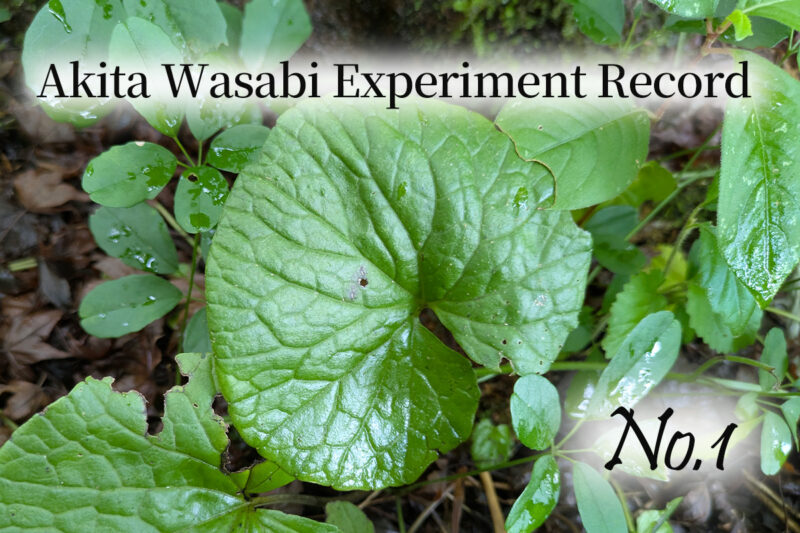
Written on August 21, 2025
🫙 Drawn to Wasabi Oil
One Saturday morning, I watched a TV program featuring wasabi oil.
It looked delicious, and naturally, I wanted to taste it.
But more than that—I felt inspired to grow my own wasabi and create wasabi oil and wasabi salt from scratch.
🧬 Types of Wasabi and Their Aromas
As I began researching, I discovered that there are several types of wasabi.
Among them, sawa wasabi—the kind that grows in clear, cool streams—is said to be best suited for oil infusion.
It thrives in water around 13°C and develops a rich aroma and flavor.
🌱 Wasabi Types Summary
| Name | Characteristics | Cultivation | Common Uses |
|---|---|---|---|
| Sawa Wasabi (True Wasabi) | Grows in clear streams. Fragrant and slightly sweet. | Hydroponic (streams, spring water) | High-end sushi, sashimi, wasabi oil |
| Hata Wasabi (Field Wasabi) | Modified variety. Doesn’t require water. | Grown in soil | Leaves and stems for pickles, tsukudani |
| Yama Wasabi (Western Horseradish) | Strong pungency. | Grows in fields or gardens | Meat dishes, steak, rice with egg |
| Ha Wasabi (Leaf Wasabi) | Harvested in spring. Uses leaves. | Leaves from sawa or hata wasabi | Soy-marinated, tsukudani, salads |
🏡 A Discovery in My Family Garden
My current home doesn’t have a stream nearby.
But my family’s house is surrounded by uwabamisou (Elatostema umbellatum), a mountain vegetable that grows in clean, moist environments.
There used to be a stream behind the house—perhaps wasabi could grow there.
When I asked my mother about transplanting wasabi, she surprised me:
“There’s already wasabi growing in the yard.”
If it’s growing naturally, the environment must suit it.
And if it’s sawa wasabi, the hurdle for making oil becomes much lower.
🔍 How to Identify True Wasabi
- Heart-shaped leaves with soft texture and visible veins
- Rhizome color: green to light brown, smooth surface
- When torn, the stem gives off a refreshing, sweet aroma
- Grows in spring water, clear streams, and shaded areas
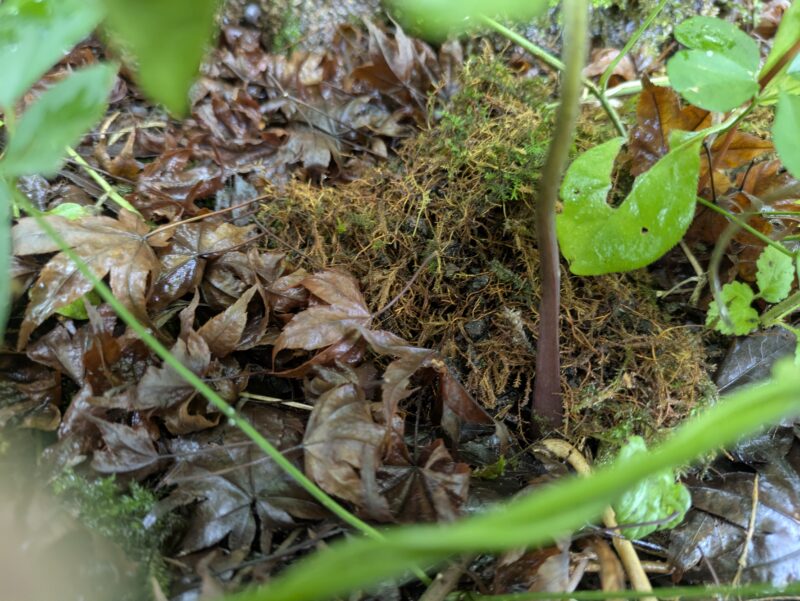
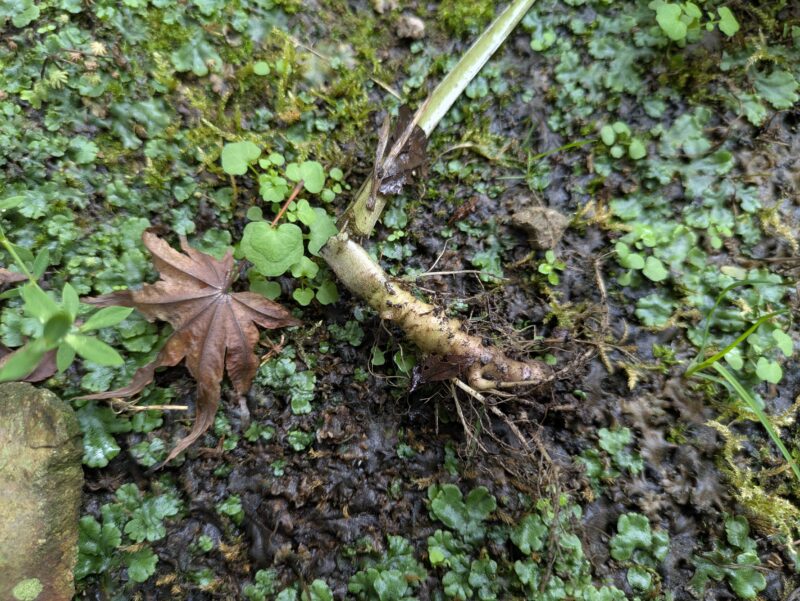
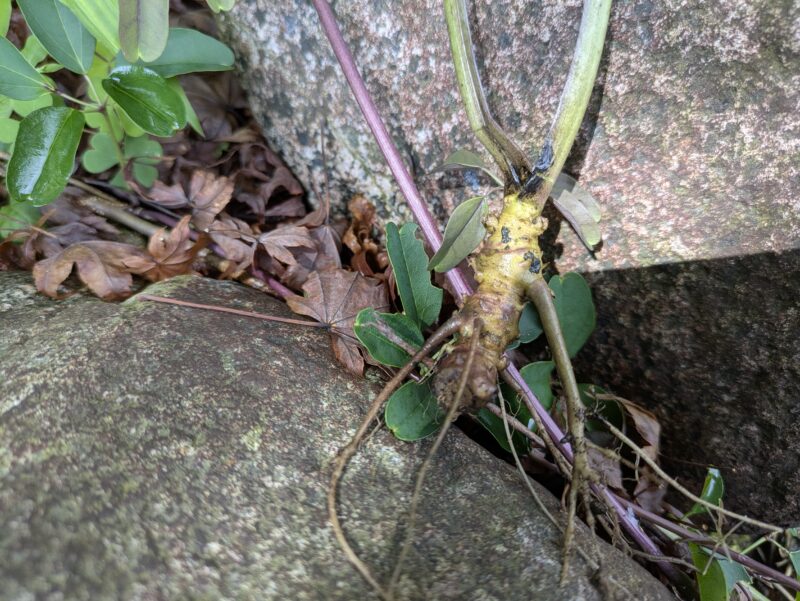
🧪 Observing the Wasabi
I visited my family home to investigate.
The leaves were heart-shaped with visible veins, but not soft.
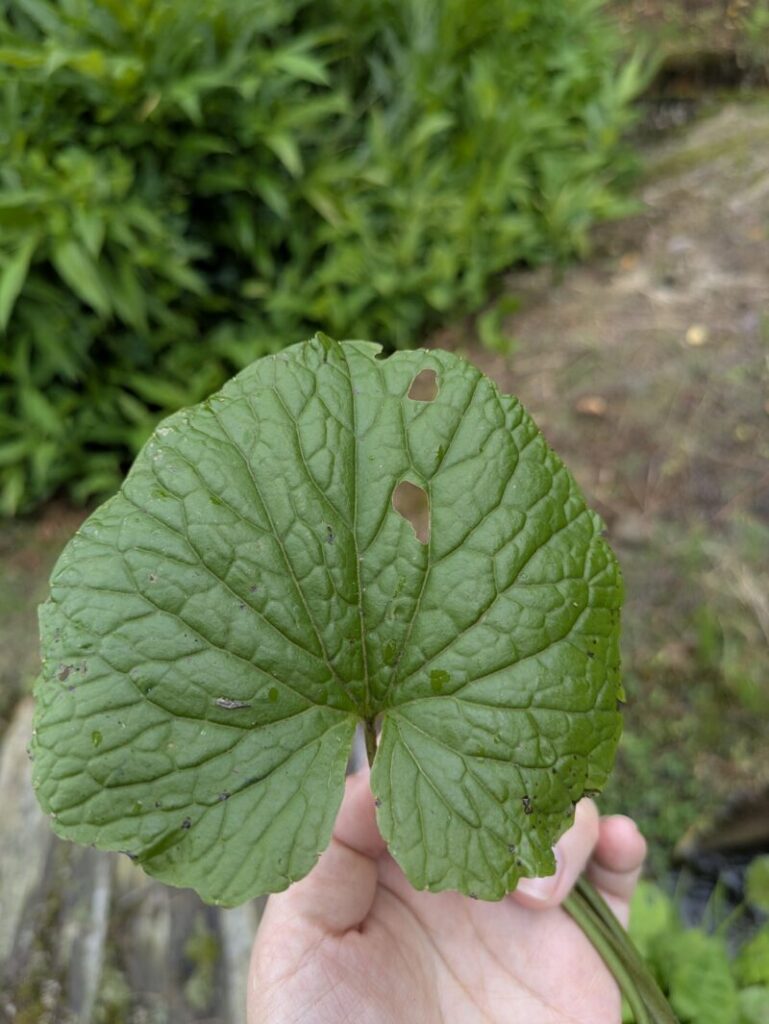
There were also fuki (butterbur), making it hard to distinguish at first.
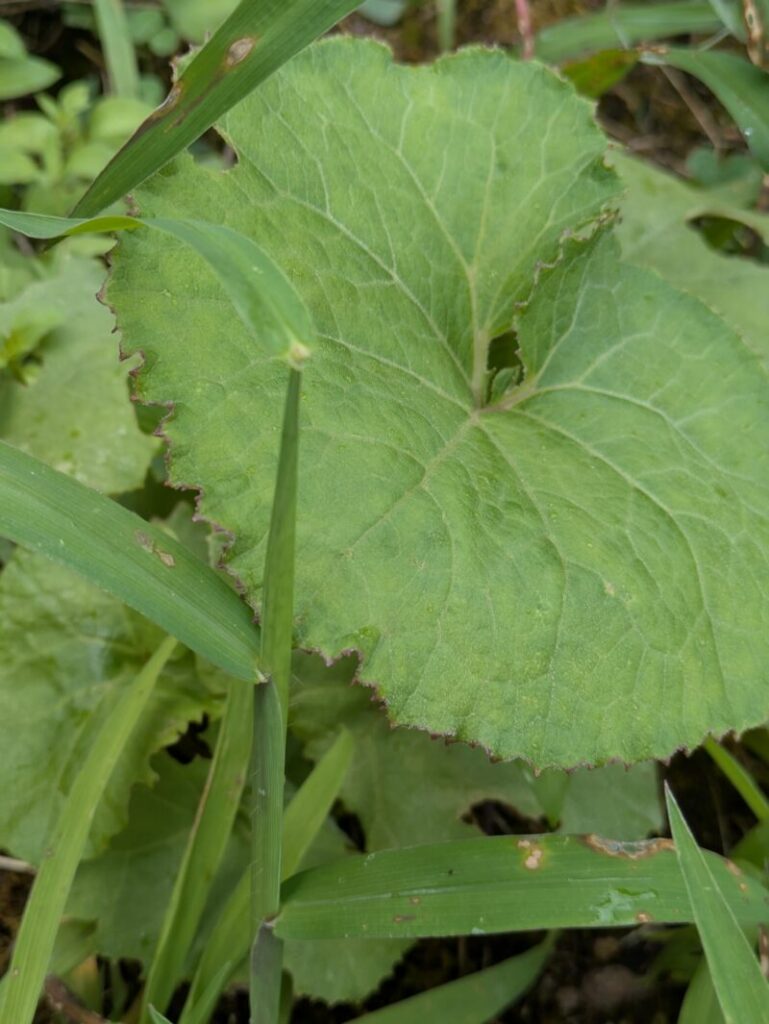
The rhizome was pale green, but the signature wasabi scent was faint.
It was growing under a momiji tree—not necessarily a maple, but a tree known for its autumn foliage.
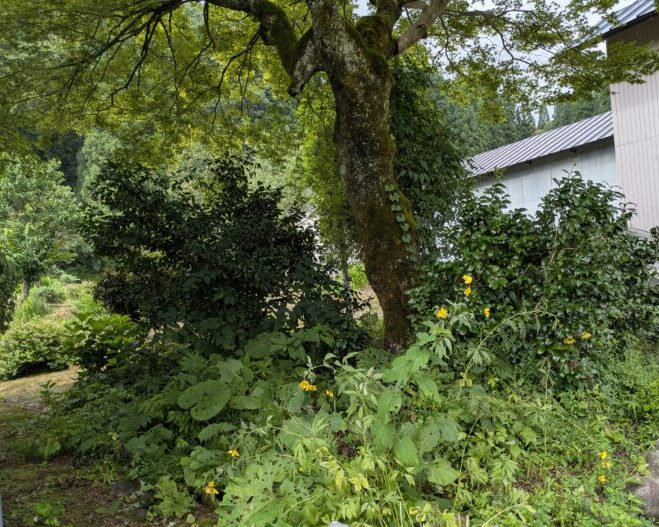
Perhaps an ancestor planted it there long ago.
If it’s sawa wasabi, the lack of flowing water may have caused oxygen deficiency, stunting the rhizome.
Transplanting it to a stream might help it “remember” its true nature.
If it’s hata wasabi or ha wasabi, it may not be suitable for oil.
🌿 Aroma and Taste Test
I brought some home and grated it.
Though the rhizome was small, a refreshing aroma rose up.
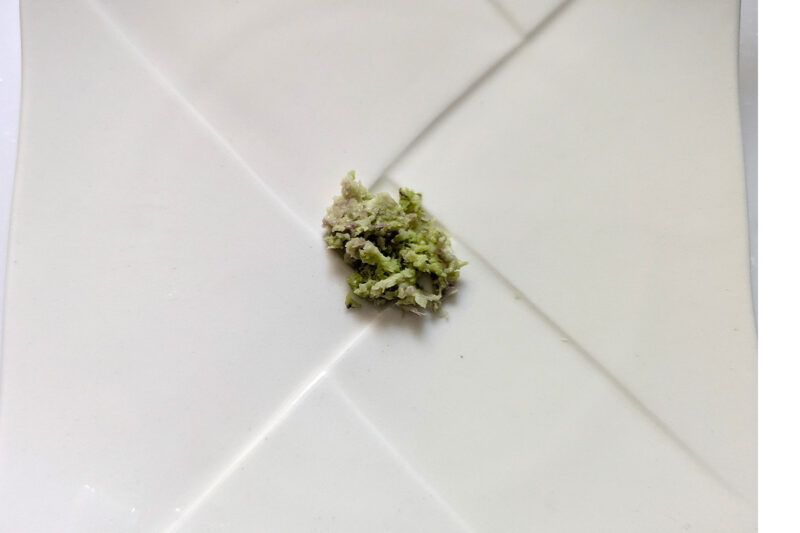
It smelled like a sushi restaurant.
Not a sharp “tsuun,” but a gentle “suuun.”
The spiciness vanished quickly, leaving no lingering heat.
It had a slight stickiness—perhaps from growing near uwabamisou?
There were hints of sawa wasabi, but not fully realized.
To make wasabi oil, I need to help this plant remember who it is.
🌊 A Quiet Relocation — Planned for Early September
I plan to transplant the wasabi to a stream behind the house in early September.
The experiment will begin then, quietly and patiently.
Can the wasabi recall its identity?
Or can I help it remember?
📉 The Decline of True Wasabi
True sawa wasabi is quietly disappearing in Japan.
Due to aging farmers and fewer clean streams, production has dropped by over 20% in some areas.
Most “wasabi” in stores is horseradish with coloring.
Real sawa wasabi is now a luxury, found only in high-end sushi shops or specialty farms.
Perhaps that rarity is what made me want to grow it myself.
Next article: –🌿Wasabi Transplant Journal — Continuing the Experiment of Rooting Life by the Water


最近のコメント