
🍵 Seasonal Tea Gatherings
I always look forward to our seasonal tea gatherings. Each time, the same group of people gathers around a Chinese tea master, yet we rarely interact outside of these sessions. We are tea companions who meet only in that moment.
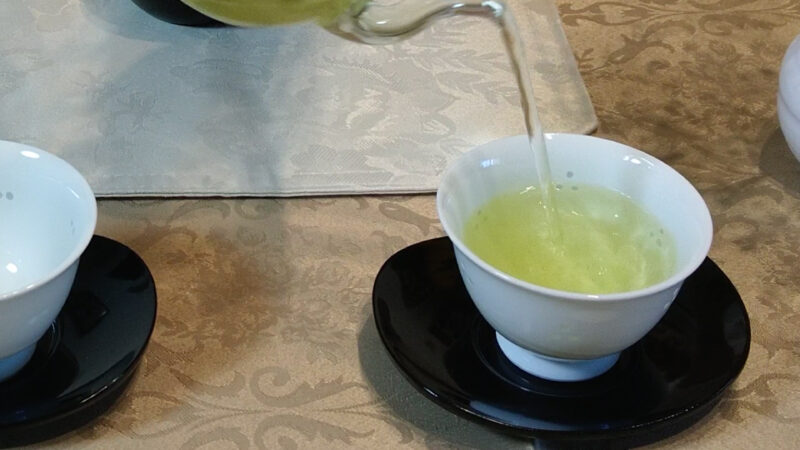
Each season, our teacher prepares three to four types of tea, along with small sweets or dim sum. After introducing the origin of each tea, she brews them one by one with great care.
We quietly observe her movements—watching the tea leaves unfurl, enjoying the gentle aroma that fills the room, and finally sipping the tea and saying, “Delicious.”
That’s all there is to it. And yet, for some reason, it feels deeply comforting. I find myself looking forward to it every time.
I’ve occasionally wondered why I enjoy it so much, but never really explored the reason. Recently, I had a chance to reflect on the idea of boundaries between people, and that led me to realize why these tea gatherings mean so much to me.
🌿 Not Conversation, but the Sharing of Sensibility
The tea gatherings are held at our teacher’s shop, a space free from excessive decoration. While the teaware and teas may be valuable, they are placed with quiet intention, harmonizing with the room rather than asserting themselves. Everything rests where it belongs—calmly, without display.
The purpose of the gathering is not to catch up on personal news or engage in small talk. It is simply to enjoy tea. Because we don’t socialize outside of these sessions, there’s no pressure to step beyond what’s appropriate. The relationships remain gently distant, and no one’s private life or beliefs dominate the space.
There’s no need to read the room or adjust your words to match others. You can simply be yourself—no performance, no pretense—and enjoy the tea as you are.
🏯 Sen no Rikyu and Toyotomi Hideyoshi
Sen no Rikyu was born into a wealthy merchant family in Sakai. Early in his life, he served Oda Nobunaga as a tea master, and as the tea ceremony became closely tied to politics, Rikyu gained considerable influence. Surrounded by fine utensils and a refined lifestyle, he appeared to live with elegance and privilege.
After Nobunaga’s death, Rikyu entered the service of Toyotomi Hideyoshi, further rising in status. As Hideyoshi’s chief tea master, Rikyu held such authority that even powerful feudal lords bowed to him. Hideyoshi, known for his love of grandeur, famously built the “Golden Teahouse”—a three-mat room with gold-covered pillars and golden utensils.
Rikyu’s philosophy, however, seemed to differ from Hideyoshi’s. In the Nampōroku—a later compilation attributed to one of Rikyu’s disciples—he is quoted as saying:
“A house should be just enough to shelter, a meal just enough to stave off hunger. This is the teaching of Buddha, and the true spirit of tea.”
This ideological gap between the two men is said to have led to Rikyu’s tragic end—ordered by Hideyoshi to commit ritual suicide.
Why would someone with wealth and power hold such a humble philosophy?
Sen no Rikyu
Sen no Rikyu (1522–1591), considered the father of the Japanese tea ceremony, emphasized simplicity and spiritual depth in tea gatherings.
Toyotomi Hideyoshi
Toyotomi Hideyoshi (1537–1598), a powerful warlord who unified Japan in the late 16th century, was known for his love of opulence.
Nampōroku
he Nampōroku is a later compilation attributed to one of Rikyu’s disciples, though its authenticity remains debated.
🍶 The Allure of the Tea Gathering
We can’t know exactly what Rikyu thought, but perhaps he believed that no matter how wealthy or powerful one becomes, everyone needs time to return to their true self. And the more status or authority one holds, the harder that becomes.
Hideyoshi, who rose from poverty through sheer effort, eventually gained great wealth and power. He flaunted his golden teahouse and lavish utensils. How did Rikyu see that? Was it Hideyoshi’s true self—or something meant to conceal?
To Rikyu, perhaps such extravagance was not authenticity, but a mask.
A small, modest teahouse—free from vanity and cluttered relationships. Only what is necessary is present. Tea is brewed with care and offered with sincerity. In that space, status and power dissolve, and people meet as equals.
In an era dominated by hierarchy and authority, such moments may have been the ultimate luxury. The more elite one was, the more one may have longed for that kind of time.
🗝 The Essence of a Tea Master — Rikyu’s Final Offering
In The Book of Tea by Okakura Kakuzo, the final moments of Sen no Rikyu are described with quiet gravity.
Rikyu served under Toyotomi Hideyoshi, who deeply respected his mastery of tea and its philosophy. Yet Rikyu was not one to flatter power. At times, he voiced his opinions directly to Hideyoshi. During a period of tension between them, Rikyu’s enemies accused him of plotting to poison Hideyoshi—a claim that, in that era, was enough to justify execution.
On the day of his death, Rikyu invited his closest disciples to a final tea gathering.
As they waited in the outer room, a faint wave of tea aroma drifted from the tearoom.
One by one, they were quietly summoned inside and took their seats.
Tea was served in silence. No one spoke. Each guest simply received the tea and drank.
Finally, Rikyu himself took a sip.
Following tradition, the disciples asked to view the utensils.
Rikyu handed each item to them, one by one, offering them as keepsakes.
Only the tea bowl in his hands remained.
“This bowl,” he said, “has been defiled by the lips of one who is unfortunate. It must never be used again.”
With that, he shattered it.
The tea gathering came to a quiet close.
The disciples offered their final farewells and left the room, all but one—his closest companion, who remained to witness the end.
Rikyu sat calmly, gazing at the blade before him.
Then, he spoke his final words:
“Welcome, O sword of eternity.
You have pierced Buddha, guided Bodhidharma—
Now do the same to me, and follow your path.”
Even in his final tea gathering, Rikyu adorned no one, flattered no one.
He simply offered the beauty of tea.
That, I believe, was the essence of a true tea master.
The Book of Tea by Okakura Kakuzo
Okakura Kakuzo (1862–1913) was a Japanese scholar who introduced Eastern aesthetics to the West through his book The Book of Tea (1906).
Bodhidharma
Bodhidharma is a semi-legendary Buddhist monk credited with bringing Zen Buddhism from India to China.
🍂 What Makes a True Tea Master
A true tea master is not someone who simply brews expensive tea in elegant utensils.
Rather, it is someone who creates a space where people can shed their masks, return to themselves, and savor the moment.
Someone who removes what is unnecessary, brews tea with care, and offers time that allows others to be as they are.
A person who can provide such a space—where one quietly reconnects with oneself—
That, perhaps, is what it means to be a true master of tea.

最近のコメント