

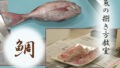
I recently joined a fish-cutting class to learn how to fillet a whole sea bream, a fish that holds a special place in Japanese cuisine.
In Japan, sea bream—called tai—is often associated with celebrations and good fortune.
Even so, when I buy a whole fish at the supermarket, I usually ask them to fillet it for me.
You don’t need to know how to fillet fish to enjoy Japanese cooking, but I’ve always admired people who can do it themselves.
As a beginner, I expected to practice on a small fish.
To my surprise, each participant received two large sea bream.
I quietly wondered, “Is this really okay for beginners?”
But the challenge made the experience even more rewarding.
Two Traditional Ways to Prepare the Fish
Our instructor—who normally fillets tuna—demonstrated two classic Japanese methods:
- Removing the head first, then gutting the fish
- Keeping the head on and removing the innards through the belly
Reference video:
In Japanese cooking, the method you choose depends on the dish you want to make.
Removing the innards first while keeping the head on tends to keep the flesh cleaner, with less blood spreading inside.
🐟 Cultural Note:
In Japan, keeping the head on is preferred when preparing fish for whole grilling, known as shioyaki.
The presentation is considered beautiful and respectful to the ingredient, and the head contains flavorful meat that many people enjoy.
For this lesson, I chose the head-on gutting method, which felt cleaner and more traditional.
Challenging the Three-Piece Fillet (Sanmai-oroshi)
Reference video:
The three-piece fillet, called sanmai-oroshi, is a fundamental technique in Japanese fish preparation.
I was so focused that I forgot to take photos, but surprisingly, my fillets turned out better than expected for a beginner.
One fish became sashimi, and the other was cut into four portions for cooking.
Discovering Three Styles of Sashimi Preparation
I also learned three traditional ways to prepare sashimi:
- Removing the skin
- Lightly blanching the skin (yubiki)
- Torching the skin with a burner
Reference video:
I didn’t realize one fish could offer so many textures and flavors.
Japanese cuisine values subtle differences, and sashimi is a perfect example of that.
I’ll need to practice soon before I forget everything I learned.
How I Used the Fish at Home — A Three-Day Journey
Day 1: Sashimi, Salt-Grilled Fillets, and Simmered Fish Head & Bones
Back home, I made simmered sea bream head and bones, a comforting dish often enjoyed in Japanese households.
I also served fresh sashimi.

I simmered all the bones from two fish at once, which turned out to be too much.

I should have frozen half for miso soup later.
My second son isn’t a fan of sashimi, so I grilled fillets with sea salt for him—another simple and beloved Japanese preparation.
Day 2: Sea Bream Rice (Tai-meshi)
The next day, I made tai-meshi, a traditional sea bream rice cooked in a clay pot.
I lightly grilled the fillets first, added all the ingredients, and let everything cook together.


The aroma alone felt like a celebration.
Day 3: Marinated Sashimi Chazuke
With the remaining sashimi, I made zuke-chazuke—marinated fish served over rice with hot tea.
It’s a humble, comforting dish that captures the essence of Japanese home cooking.
Next time, I’d like to try Western-style dishes like carpaccio or pan-seared sea bream to explore new possibilities.

最近のコメント