
- 🧭 Lead-In: A Familiar Justification, A Fading Promise
- 💸 The Dream of a Tax Cut—and the Wall It Hits
- 🧾 What We Can—and Can’t—See in Japan’s Budget
- 🖥️ Case Study: GIGA School Program and the “Lump Sum” Problem
- ⚖️ Is the Budget Fairly Distributed?
- 🤖 Could AI Make It Transparent?
- 🚧 The Real Barrier: Intentional Opacity
- 🙈 Why Is It Still This Way?
- 🔍 Visibility Is the First Step Toward Change
🧭 Lead-In: A Familiar Justification, A Fading Promise
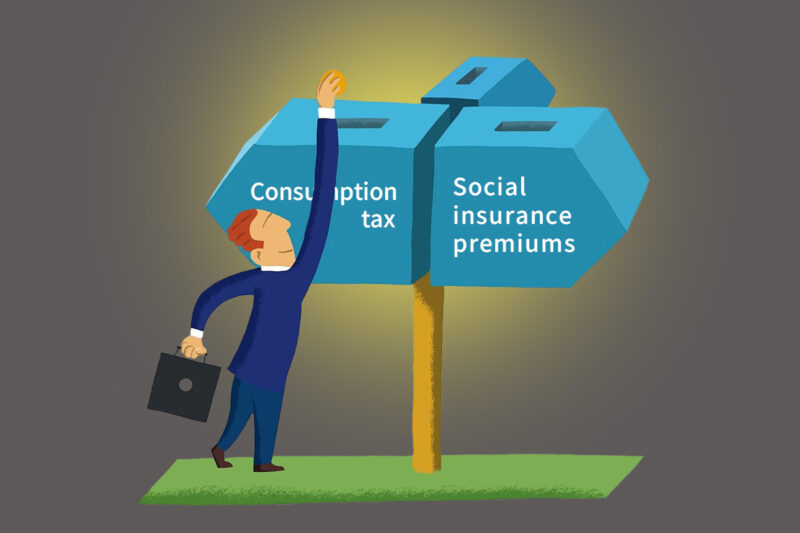
Whenever Japan’s government proposes a tax hike—especially on consumption—European tax rates are invoked as justification. “Look at Sweden,” they say. “Their VAT is 25%. Ours is only 10%.” The implication? If we pay more, we’ll receive more—better pensions, stronger healthcare, secure futures.
But reality tells a different story. Japan’s social guarantees are shrinking, not expanding. And the more we pay, the less we seem to get.
This article explores the structural opacity behind Japan’s budget system—and why the dream of a consumption tax cut remains elusive.
💸 The Dream of a Tax Cut—and the Wall It Hits
“We want the consumption tax to be lowered.”
That’s the wish of many citizens.
It seems simple: reduce government waste, and use the savings to lower taxes. But in practice, even when inefficiencies are cut, the benefits rarely reach the public.
Why? Because Japan’s budget isn’t designed around public needs. It’s shaped by political convenience, not civic accountability.
🧾 What We Can—and Can’t—See in Japan’s Budget
Yes, Japan’s budget documents are technically public. Citizens can access:
- Annual budgets (income and spending) via the Ministry of Finance
- Final accounts showing actual expenditures
- Breakdowns of social security, education, and other sectors
But these documents are often:
- Overly abstract (“Social Security” = ¥38 trillion, but what exactly was funded?)
- Fragmented across agencies, making holistic understanding difficult
- Lacking outcome data (e.g., how did spending improve education or reduce inequality?)
🖥️ Case Study: GIGA School Program and the “Lump Sum” Problem
Japan’s GIGA School initiative aimed to provide every student with a tablet or PC. The government allocated over ¥460 billion.
What’s visible:
- Total amount spent
- General goals (“1 device per student”)
What’s missing:
- Device models, unit prices, vendor names
- School-level distribution
- Outcome metrics (Did it improve learning? Reduce disparities?)
Some municipalities covered all costs. Others passed expenses to parents. The result? Unequal access under a supposedly national program.
⚖️ Is the Budget Fairly Distributed?
Not necessarily.
- Regional disparities are hidden behind “national” programs.
- Fairness is undefined—“targeted support” may mask favoritism.
- Political influence shapes allocations, often favoring certain regions or industries.
🤖 Could AI Make It Transparent?
Yes. If budgets were recorded in structured formats (CSV, JSON) with standardized categories and linked outcomes, AI could instantly answer:
- “How much did Akita spend on education in 2023?”
- “What was the per-unit cost of GIGA tablets?”
- “How much of the defense budget went to foreign contractors?”
But today’s system is designed to resist such clarity.
🚧 The Real Barrier: Intentional Opacity
- Most data is in PDFs or scanned images—not machine-readable
- Categories vary across ministries—no unified format
- Details are buried to avoid scrutiny and accountability
Transparency would expose:
- Wasteful spending
- Unequal distribution
- Political favoritism
So instead, the system remains vague.
🙈 Why Is It Still This Way?
Because vagueness protects power.
- Specifics would reveal who made decisions—and why.
- Citizens could challenge allocations.
- Media could investigate favoritism.
Even though Japan spends over ¥200 billion annually on AI initiatives, almost none of it is dedicated to budget transparency.
To put it in perspective:
Creating a transparent, AI-readable budget system might cost ¥100 billion.
That’s just 1/8 of the ¥812 billion Japan contributed to Gavi (the Vaccine Alliance).
We can approve massive donations instantly, but hesitate to invest in transparency.
Isn’t it time we questioned those priorities?
🔍 Visibility Is the First Step Toward Change
In neighborhood associations, every yen is accounted for.
In national budgets, trillions are summarized in vague categories.
This isn’t a technical limitation. It’s a design choice.
And as long as citizens remain in the dark, consumption tax hikes will continue to be the easiest political option.
Let’s stop accepting “we have no budget” as an answer.
Let’s demand to see the receipts.


最近のコメント