

This year—well, technically at the end of last year—I made osechi ryori again.

The top three boxes were for our household, and the bottom two were gifts for my parents.
This is my third year making osechi from scratch.
The menu is almost the same every year, but I continue this tradition because I want to honor the meanings and good fortune associated with each dish, and because I want to preserve this charming piece of Japanese culture.
The jubako (stacked lacquer boxes) I use were passed down from my mother.


They’re a wooden okamochi (a traditional wooden carrying box once used by food vendors) paired with vermilion lacquered jubako—quite rare nowadays.
My mother told me, “I bought it ages ago but never used it.”
She never made osechi herself, so I didn’t even know she owned them.
From now on, I’ll take good care of them and keep the tradition alive.
Cooking Osechi for Three Households: Like Running a Tiny Kitchen

For my in-laws, I made a fresh batch of simmered vegetables on New Year’s morning.
Preparing osechi for three households took two full days.
My eldest son peeked into the kitchen and said,
“This isn’t a kitchen anymore. This is a professional kitchen, right?”
Honestly, he wasn’t wrong.
Day 1 and Day 2: The Workflow
Day 1
- Matsukaze-yaki (seasoned meat loaf)
- Sweet chestnut paste (kurikinton)
- Spicy simmered butterbur
- Namasu (daikon & carrot salad)
- Pork simmered in black vinegar
Day 2
While simmering the pork again:
- Sweet black beans (kuromame)
- Tazukuri (candied dried sardines)
- Datemaki (sweet rolled omelet)
- Glazed shrimp
- Simmered vegetables (nimono)
I had planned to cook the black beans first, but I forgot the step where the beans need to soak overnight.
Lesson learned: anything that requires long simmering should be scheduled for Day 1.
I bought my son’s favorite salmon kelp rolls and my husband’s beloved herring roe.
With a food processor, dishes like datemaki and kurikinton come together in no time.
Still, I kept wondering where all my time was going.
Grocery runs, laundry, cleaning…
In the end, it feels like “all the year-end chores” are what really consume the hours.
Finding Encouragement on Social Media
Curious about what others were making, I browsed social media.
To my surprise, many people were preparing osechi for three or four households.
It was encouraging to see.
Some were cooking elaborate osechi while caring for babies—truly impressive.
Everyone’s dishes looked so stylish and beautifully made.
New Year’s Eve: Saved by My Husband’s Steak
I had no energy left to prepare a New Year’s Eve feast.
Just when I was wondering what to do, my husband stepped in and cooked steak for us.
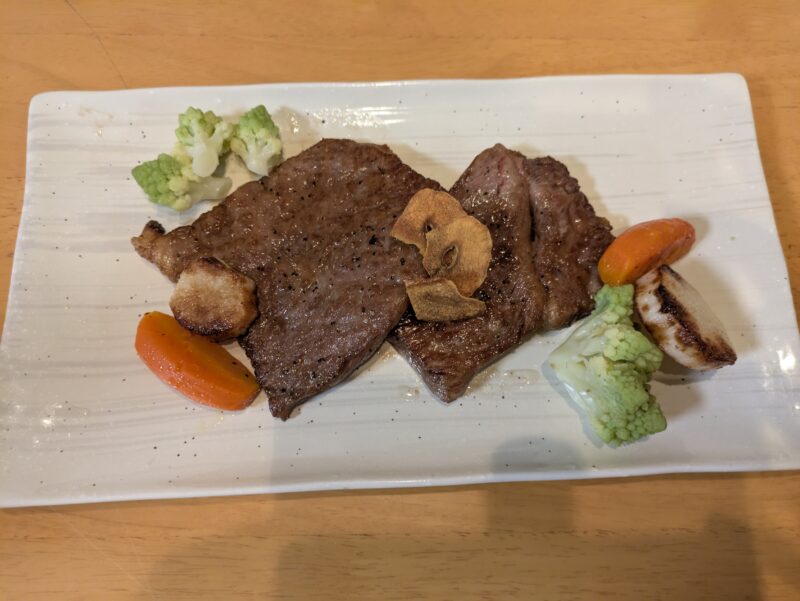
He even grilled whatever vegetables we had in the fridge.
The beef—Tsuru-gata and Nishiki beef—are both from Akita.
Both had wonderfully sweet fat, though the Tsuru-gata felt slightly richer.
We paired it with a red wine recommended by a shop clerk at Kaldi: Vicomte de Miray.

I wish I could say I savored the aroma, but I was so exhausted from cooking that I honestly couldn’t taste the finer notes.
I fell asleep on the sofa for an hour right after drinking it.
Still, it matched the steak perfectly.
We also had our traditional New Year’s soba afterward.
Next Year, We’ll Be the Ones Welcoming Family
This spring, my eldest son will move out.
Next New Year’s, our home will finally become the “place everyone returns to.”
It may also be time to rethink our usual visits to my parents’ and in-laws’ homes.
My husband’s aunts and uncles no longer travel home for the holidays, and hosting becomes harder with age.
Maybe next year I can add one or two new dishes to our usual osechi lineup.
Scallops glazed in soy sauce, temari sushi, roast beef…
I’ll leave the final decision to my future self.
Family shapes change, and so does the shape of osechi.
I want to welcome the next New Year while enjoying these gentle shifts.

最近のコメント